Home / GHS pictograms CLP Annex V

GHS pictograms

The nine hazard pictograms used on labels and in section 2 of the safety data sheet in the EU – what each one means, which hazard classes it covers and the rules for using them.

Sources last checked: 14 October 2026 · CLP consolidated version of 1 July 2026 Author: Maximilián Pálffy, chemical engineer General information, not legal or professional advice. The binding text is the consolidated CLP Regulation on EUR-Lex.
9 Hazard pictograms, GHS01 to GHS09
1 cm² Minimum area of each pictogram on the label
1/15 Minimum share of the label area for the Article 17 information
Art. 26 Precedence rules that reduce the number of pictograms

The nine pictograms

Each pictogram is a square set at a point with a black symbol on a white background and a red frame. The hazard classes and categories below are taken from Annex V to CLP.
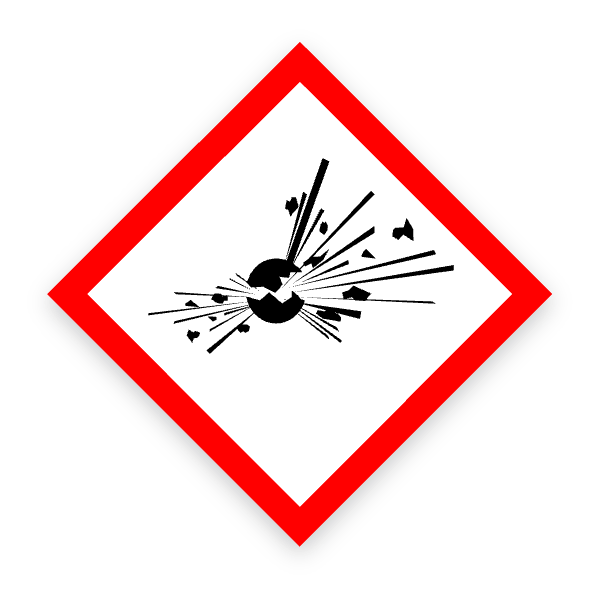
GHS01 pictogram – exploding bomb
GHS01

Exploding bomb

Unstable explosives; explosives of divisions 1.1–1.4; self-reactive substances and mixtures and organic peroxides, types A and B.
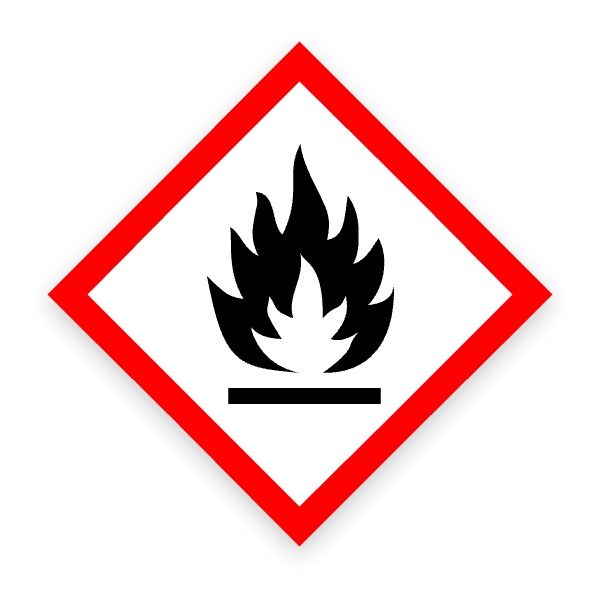
GHS02 pictogram – flame
GHS02

Flame

Flammable gases 1A, 1B; aerosols 1, 2; flammable liquids 1–3; flammable solids 1, 2; self-reactive substances and organic peroxides, types B–F; pyrophoric liquids and solids; self-heating substances 1, 2; substances that emit flammable gases in contact with water 1–3; desensitised explosives 1–4.
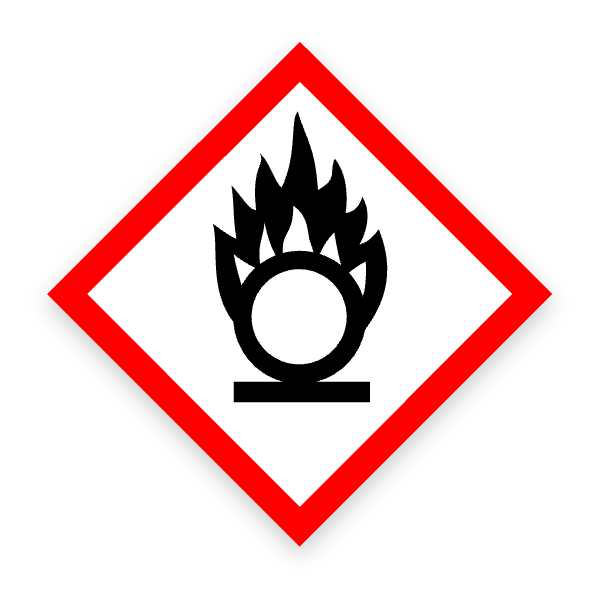
GHS03 pictogram – flame over circle
GHS03

Flame over circle

Oxidising gases 1; oxidising liquids 1–3; oxidising solids 1–3.
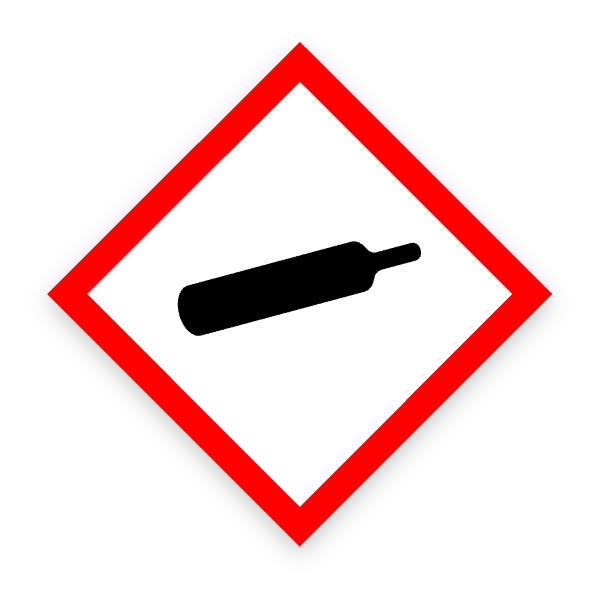
GHS04 pictogram – gas cylinder
GHS04

Gas cylinder

Gases under pressure: compressed, liquefied, refrigerated liquefied and dissolved gases.
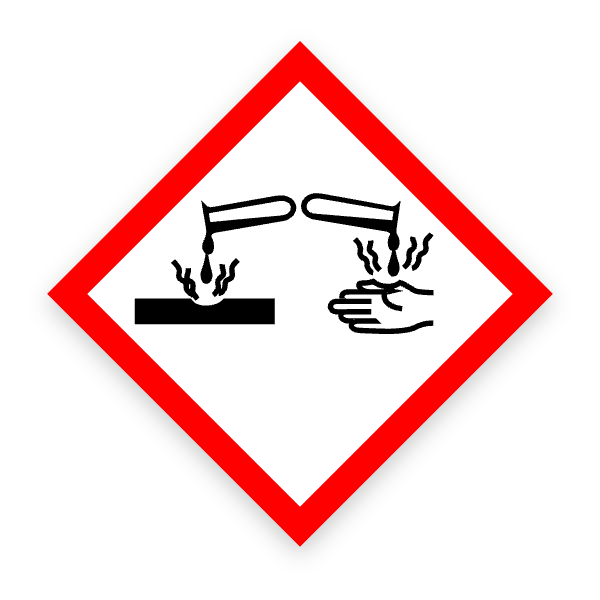
GHS05 pictogram – corrosion
GHS05

Corrosion

Corrosive to metals 1; skin corrosion 1, 1A–1C; serious eye damage 1.
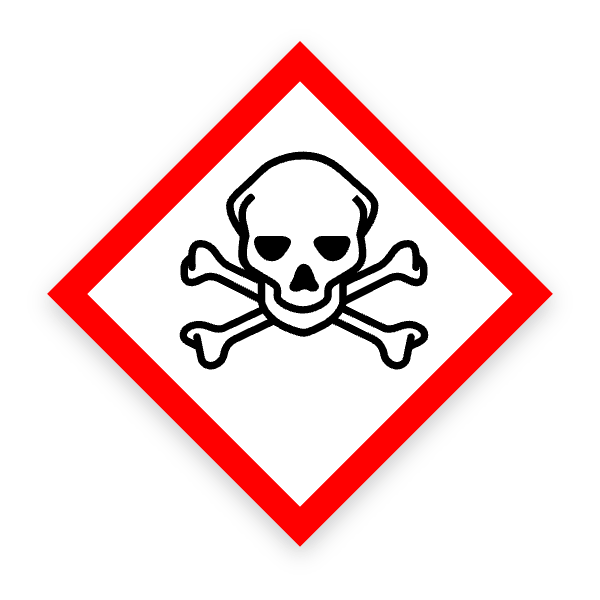
GHS06 pictogram – skull and crossbones
GHS06

Skull and crossbones

Acute toxicity (oral, dermal, inhalation), categories 1–3.
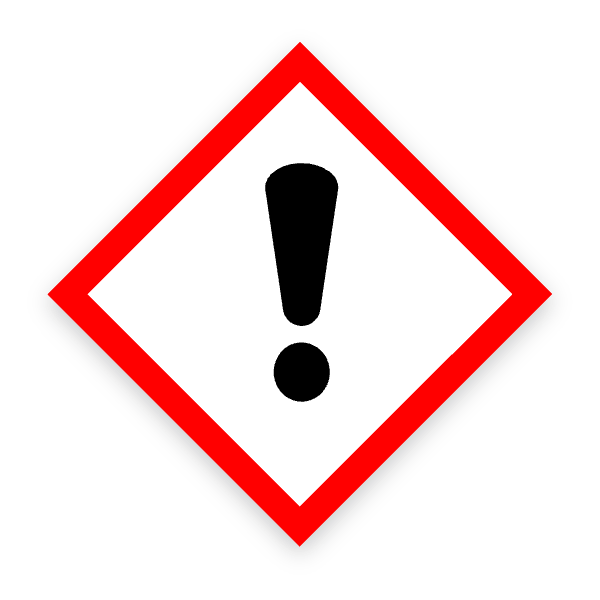
GHS07 pictogram – exclamation mark
GHS07

Exclamation mark

Acute toxicity 4; skin irritation 2; eye irritation 2; skin sensitisation 1, 1A, 1B; STOT single exposure 3 (respiratory tract irritation, narcotic effects); hazardous to the ozone layer 1.
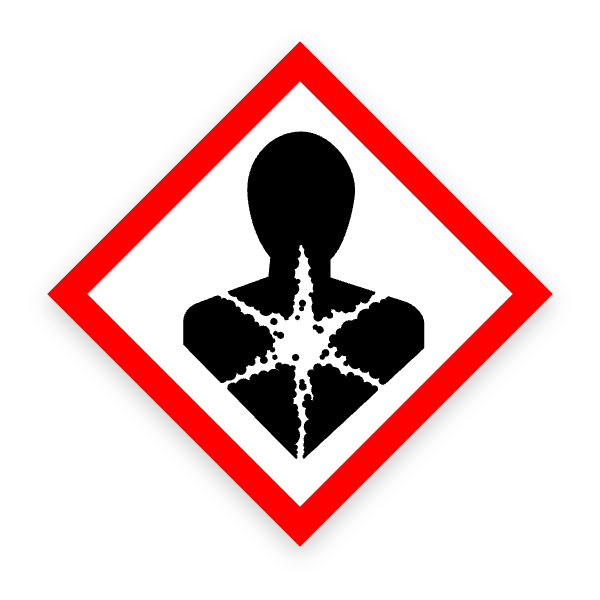
GHS08 pictogram – health hazard
GHS08

Health hazard

Respiratory sensitisation 1, 1A, 1B; germ cell mutagenicity, carcinogenicity and reproductive toxicity 1A, 1B, 2; STOT single exposure 1, 2; STOT repeated exposure 1, 2; aspiration hazard 1.
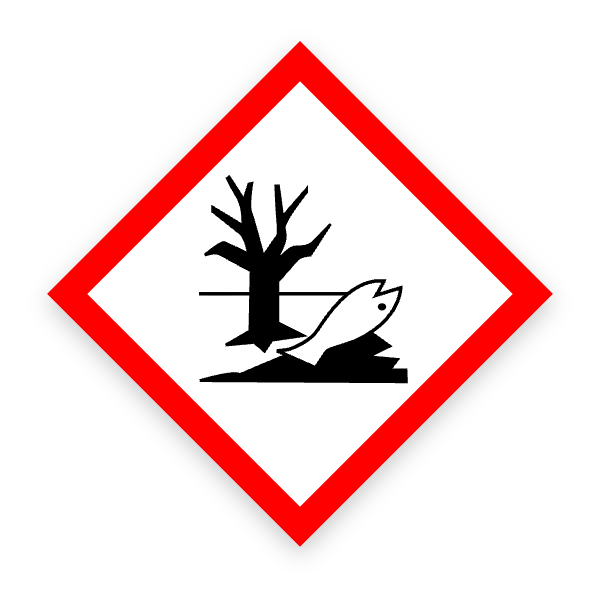
GHS09 pictogram – environment
GHS09

Environment

Hazardous to the aquatic environment: acute 1, chronic 1 and chronic 2.
No pictogram is required for explosives of divisions 1.5 and 1.6, flammable gases category 2, aerosols category 3, self-reactive substances and organic peroxides type G, effects on or via lactation, and aquatic chronic categories 3 and 4. The hazard statements and, where required, the signal word still apply – see H and P statements. Source: CLP, Annex V, Parts 1–4

Rules on the label

Annex I, 1.2.1

Format and size

A square set at a point, with a black symbol on a white background and a red frame wide enough to be clearly visible. Each pictogram covers at least one fifteenth of the label area reserved for the Article 17 information and never less than 1 cm².
Article 26

Precedence

  • GHS01 applies: GHS02 and GHS03 are optional, unless more than one is compulsory
  • GHS06 applies: GHS07 is not shown
  • GHS05 applies: GHS07 is not shown for skin or eye irritation
  • GHS08 for respiratory sensitisation: GHS07 is not shown for skin sensitisation or skin and eye irritation
  • GHS02 or GHS06 applies: GHS04 is optional
Source: CLP, Article 26 and Annex I, Section 1.2.1

GHS pictograms vs. transport labels

The UNECE pictogram page shows more than nine symbols. Only the nine with a red frame are GHS hazard pictograms. The coloured diamonds with a class number in the bottom corner are transport labels under the UN Model Regulations, ADR and RID – a separate system.

CLP Annex V

Hazard pictogram

Black symbol on a white background with a red frame. It goes on the supply label and in section 2 of the safety data sheet and shows the hazard class under CLP.
ADR / RID

Transport label

Coloured background and the class or division number in the bottom corner (for example 3 for flammable liquids, 8 for corrosive substances). It goes on packages and vehicles during transport. In the SDS only the transport hazard class is given, in section 14.
CLP Article 33

Both on one package

If the outer packaging carries a transport label for the same hazard, the CLP pictogram does not have to appear on it; the same applies to a single packaging. Inner packaging is still labelled under CLP.
Until 2015

Old orange symbols

The orange squares with a black symbol (Xn, Xi, T, C, F, O, E, N) came from the repealed Directives 67/548/EEC and 1999/45/EC. For mixtures, CLP fully replaced them on 1 June 2015, with a transition period for products already on the market until 1 June 2017. They are no longer used.
Sources: CLP, Articles 33 and 61 · UNECE – GHS pictograms and transport labels

Classification and pictograms done for you

We classify your mixture under CLP and prepare the safety data sheet with the right pictograms, hazard statements and precautionary statements.

Sources

Sources last checked: 14 October 2026. Always use the consolidated version on EUR-Lex.