Home / Substance database / Technical benzine Substance database · CAS 64742-49-0 · 64742-89-8

Technical benzine

low boiling point petroleum naphtha

What a safety data sheet for technical benzine and mixtures containing it has to cover – harmonised classification, workplace limits and transport, taken from official sources.

Sources last checked: 14 October 2026 · CLP consolidated version of 1 July 2026 Author: Maximilián Pálffy, chemical engineer This page is not a safety data sheet. We do not publish SDSs of specific products – the figures come from official sources and the binding text is always the legislation itself.
64742-49-0 CAS number
265-151-9 EC number
649-328-00-1 Index number (CLP Annex VI)
UN 1268 UN number (ADR)

Harmonised classification

Entry in CLP Annex VI, Table 3: e.g. Naphtha (petroleum), hydrotreated light; Solvent naphtha (petroleum), light aliph..
Annex VI, Table 3

Classification

  • Carc. 1B – carcinogenicity, category 1B (H350)
  • Muta. 1B – germ cell mutagenicity, category 1B (H340)
  • Asp. Tox. 1 – aspiration hazard, category 1 (H304)
Label elements

Labelling

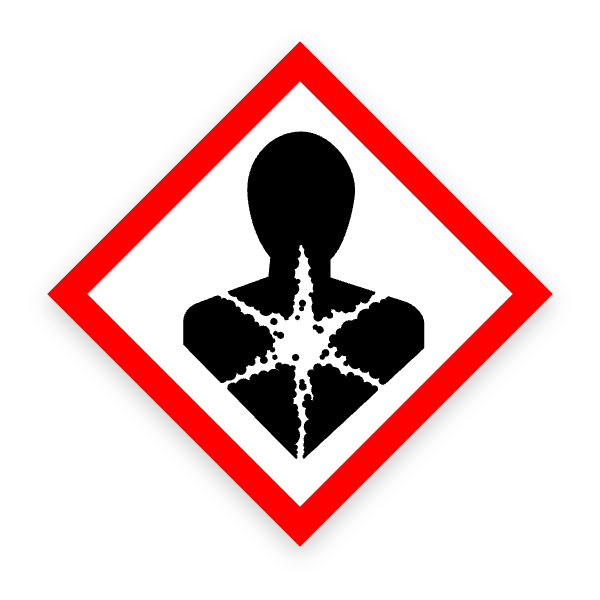
GHS08 pictogram – health hazard
Signal word: Danger · GHS08
  • H350 May cause cancer.
  • H340 May cause genetic defects.
  • H304 May be fatal if swallowed and enters airways.
  • “Technical benzine” is not a single substance. The figures above are for naphtha (petroleum), hydrotreated light (CAS 64742-49-0). Solvent naphtha (petroleum), light aliph. (CAS 64742-89-8, EC 265-192-2, index 649-267-00-0) has the same harmonised classification.
  • Note P: the classification as carcinogen and mutagen applies unless the substance contains less than 0.1 % w/w benzene. Then at least the precautionary statements (P102-)P260-P262-P301 + P310-P331 apply and aspiration hazard remains.
  • Flammability is not harmonised – the supplier classifies it from the flash point and boiling point.
Source: CLP, Annex VI, Part 3 and Annex III

Workplace limits and transport

Occupational exposure limits are national. The values below are those of Slovakia; an SDS states the limits of the country where it is supplied, together with their legal basis.

Government Regulation No 355/2006

Occupational exposure limits (Slovakia)

  • No limit is set for “technical benzine” as such
  • The limit for white spirit (50 ppm / 300 mg/m³; short-term 100 ppm / 600 mg/m³) applies only to white spirit with benzene up to 0.1 % w/w
  • Otherwise the SDS gives the limits of the individual components
ADR 2025

Transport

  • Usually UN 1268 petroleum distillates, n.o.s. – class 3
  • Packing group I, II or III depending on boiling point and flash point
  • Label 3
Sources: Government Regulation No 355/2006, Annex 1 (Slov-Lex) · BAM DGG-Info – ADR 2025

What the SDS must cover

All safety data sheets follow the 16 sections of REACH Annex II. For technical benzine, these points need particular attention:

Section 1 and 3 The exact petroleum substance with its CAS and EC number – the trade name “technical benzine” is not enough.
Section 2 Carc. 1B and Muta. 1B, or the justification under Note P (benzene below 0.1 %), Asp. Tox. 1 and the flammability category from the flash point.
Section 8 Limits for the relevant components according to the actual composition.
Section 9 Flash point, boiling range and vapour pressure.
Section 15 REACH Annex XVII, entry 5: substances and mixtures with 0.1 % or more benzene must not be placed on the market, with listed exceptions such as motor fuels.
The structure of all 16 sections is described in the SDS template.

Need an SDS for a mixture with technical benzine?

Send us the composition or your existing safety data sheet. We prepare a new SDS or check whether the current one meets REACH Annex II and CLP.

Sources

Sources last checked: 14 October 2026. Always use the consolidated versions of the legislation.